
「Weather」は、私たちを絶えず包み込みながらしかし意識されることの少ない微気象(microclimate)に焦点を当てたプロジェクトです。この見えない大気の運動を市民自らが観測し、データと観測行為そのものをコモンズとして共有しながら、集められた情報を 音・光・触覚 といった言語以前の別の知覚体験へと写像/変換する科学芸術的実践です。
The "Weather" project focuses on microclimates that constantly surround us yet remain largely unnoticed. This is a science-art practice where citizens observe these invisible flows, share data and the act of observation as commons, and translate the collected information into pre-linguistic perceptual experiences through sound, light, and touch.
このプロジェクトでは、初めに気象センサーデバイスの設計開発を行い、市民参加型のワークショップを通じてデバイスを量産、都市の様々な場所(自宅のベランダ、地域の公園、職場の窓辺など)に設置します。これらのセンサーは温湿度・気圧・風向風速といった微細な環境変化を捉え、そのデータをサーバーに集約、共有します。センサー設計とソフトウェアもオープンソースとして公開され、都市のミクロな気候変動を市民の共有財産として解放します。そして、収集されたリアルタイムの微気象データを用いて、大気の運動を別の感覚媒体へと翻訳し、インスタレーションとして発表します。
In this project, we first develop new weather sensor devices, then mass-produce them through citizen-participatory workshops and install them in various urban locations (home balconies, local parks, office windows, etc.). These sensors capture minute environmental changes such as temperature, humidity, atmospheric pressure, wind direction and speed, aggregating and sharing this data on servers. The sensor designs and software are also released as open source, liberating urban microclimate data as a shared asset for citizens. Using the collected real-time microclimate data, we translate these invisible flows into different sensory media and present them as installations.
大規模言語モデルが全盛となった現代、世界は言語優位の時代を迎えました。
In our contemporary era dominated by large language models, the world has clearly become language-centric.
しかし、私たちはもちろん言語だけの世界に生きているわけではありません。
However, we obviously do not live in a world made only of language.
裏道を歩いているときに吹く風の運動、雨が降る直前の空気の湿り気、100 km先で鳴った雷の聞こえ、五月の海の沖に見える光りの点描、そういった言語以前の現象が私を生成します。
The movement of wind while walking down back alleys, the humidity in the air just before rain, the sound of thunder rumbling 100 km away, the pointillism of light on the offshore May sea—such pre-linguistic phenomena generate the self.
気象とは、人類そして非人類さえもが、たとえ世界が終わりに向かっていようとも、身体性を持つ限りにおいて共有する現象のひとつです。
"Weather" is one phenomenon that humans and even non-humans share, as long as they possess embodiment, even if the world is heading toward its end.
このプロジェクトは、知性とは言語によって実行されるものである、ということが当たり前になりつつある現代に、人類が共有する・せざるを得ない「気象」を通して、私達の身体性に根ざした別種の知を再生成する試みです。
In our current era, when it is increasingly taken for granted that intelligence is enacted through language, this project seeks to regenerate an alternative form of intelligence rooted in our embodiment through the universally shared and inescapable phenomena of weather.
Weather is a project by researcher and sound artist Itsuki Doi, developed as part of Civic Creative Base Tokyo [CCBT]'s Art Incubation Program.
The weather we experience is not the weather of forecasts. It is the breeze slipping between buildings, the warmth pooling on a sunlit wall, the subtle shifts in light before rain. These microclimates—too fine-grained for conventional meteorology—are what this project seeks to capture.
Custom environmental sensors and a platform combining data visualization with social networking invite citizens to observe and share these fleeting conditions. The data, and the act of observation itself, become commons. Collected information is then mapped and transformed into pre-linguistic experiences of sound, light, and touch—reopening weather, drawn close to the individual, as public artwork.
In a society increasingly mediated by language and images, Weather reclaims an alternative knowledge rooted in perception and bodily sense.
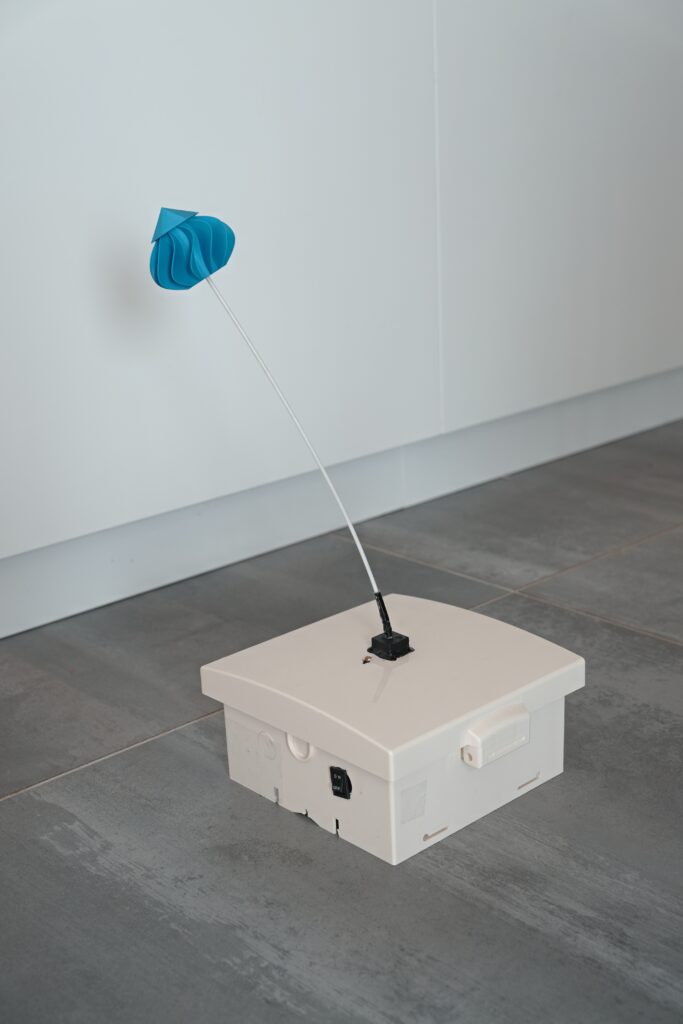
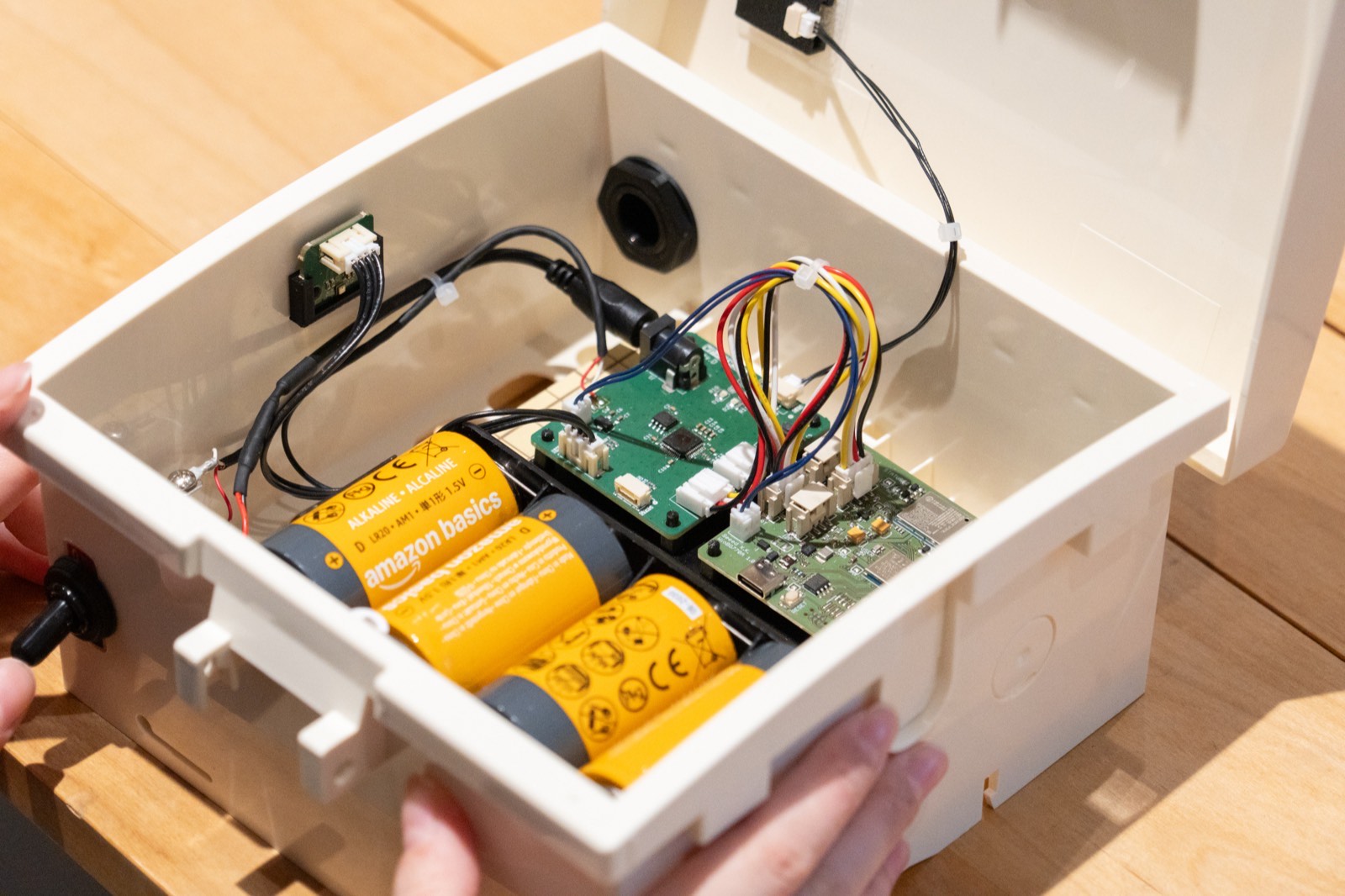
The sensor used in this project is a compact IoT weather observation device. It measures the meteorological conditions at the installation site in real-time and transmits data to the cloud via mobile network (SORACOM).
The sensor consists of three main components:
| Item | Sensor | Unit | Description |
|---|---|---|---|
| Temperature | BME280 | °C | Measures ambient temperature |
| Humidity | BME280 | % | Measures relative humidity |
| Pressure | BME280 | hPa | Measures atmospheric pressure |
| Light | CdS | mV | Brightness (analog voltage) |
| Wind | Geomagnetic | μT | Detects 3-axis (X/Y/Z) movement |
Instead of conventional anemometers (cup or propeller), we capture the "sway" of a flower-shaped object as wind data.
This method enables wind detection with a simple structure that has no mechanical moving parts.
The light sensor uses a CdS (cadmium sulfide) photoresistor. The output is recorded as raw analog voltage (mV) rather than illuminance (lux). Higher values indicate brighter environments.
graph LR
    A[Sensors] --> B[Custom Board]
    B --> C[SORACOM Wio]
    C --> D[Cloud Server]
Can be powered by either:
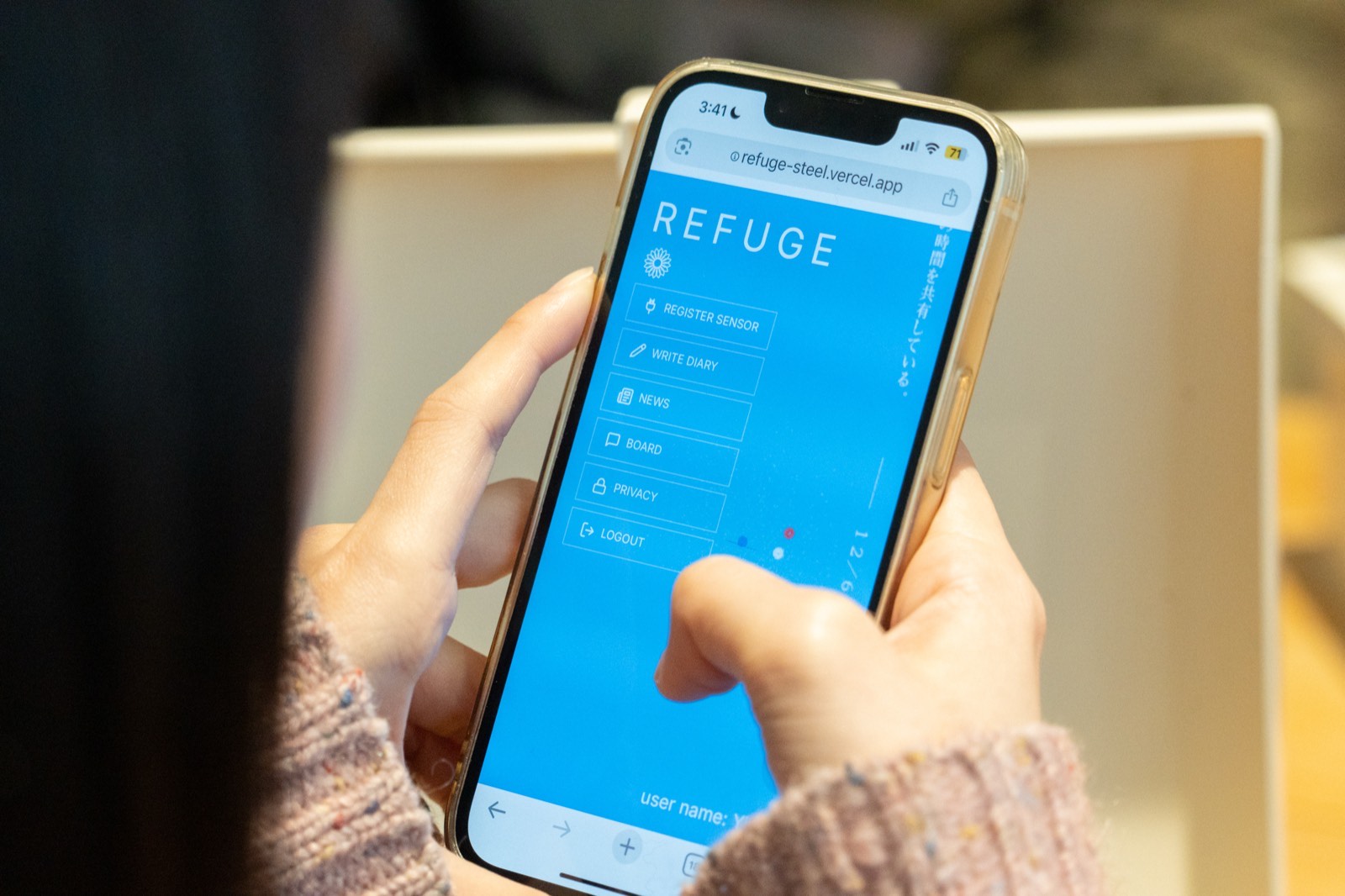
Refuge is a web application that visualizes weather data from sensors installed in various locations in real-time. Each sensor is represented as a "flower" on screen, with colors and movements that change according to actual weather conditions.
| Feature | Description |
|---|---|
| Real-time Display | Plays sensor data updated every 30 minutes |
| Flower Visualization | Each sensor placed as a flower in 3D space |
| Weather Data View | Click a flower to see temperature, humidity, pressure, light |
| Wind Expression | On-screen flowers sway in sync with sensor movement |
| Diary Function | Post and view diaries linked to each sensor |
| AI Diary | AI automatically generates daily diaries from sensor data |
Flower Color
Flower colors change according to light sensor values. Bright environments produce white to warm colors; dark environments produce blue to cool colors.
Flower Movement
Flowers move as if blown by wind, based on sway data detected by the geomagnetic sensor.
Flower Placement
Flowers are placed in an abstract coordinate system based on the latitude and longitude of actual sensor locations. With Tokyo at the center, distant sensors (Kyoto, Okinawa, etc.) appear at the edges of the screen.
Background
The screen background color changes according to time of day. It expresses morning, noon, evening, and night gradations linked to sunrise and sunset data.
In Refuge, sensor owners can write diaries. This is not merely a recording function. It is based on the idea that humans, like mechanical sensors measuring temperature and humidity, also become weather sensors.
Diary content is not limited to weather. Daily life, feelings, anything is fine. Our lives are constantly influenced by weather, whether we are conscious of it or not. Hanging laundry, opening windows, carrying an umbrella—weather is always behind such casual actions.
Machine and human—two sensors observe the same place in different ways, and they overlap on Refuge.
Every day at 22:00, AI (Claude) analyzes 24 hours of data from each sensor and automatically generates a diary describing the day's weather transitions.
Tech Stack
%%{init: {
    'theme': 'base',
    'themeVariables': {
      'primaryColor': '#ffffff',
      'primaryTextColor': '#000000',
      'primaryBorderColor': '#000000',
      'lineColor': '#000000',
      'secondaryColor': '#f5f5f5',
      'tertiaryColor': '#ffffff',
      'background': '#ffffff',
      'mainBkg': '#ffffff',
      'nodeBorder': '#000000',
      'clusterBkg': '#fafafa',
      'clusterBorder': '#000000',
      'titleColor': '#000000',
      'edgeLabelBackground': '#ffffff'
    }
  }}%%
  flowchart TB
      subgraph Sensor Layer
          sensor[BME280 + CdS + Magnetometer]
          wio[SORACOM Wio]
          sensor --> wio
      end

      mqtt[[VM: MQTT Server]]
      azure[(Azure Table Storage)]

      subgraph Vercel Cron Jobs
          fetch[fetch-soracom-data
every 10min]
          stats[calculate-sensor-stats
every 10min]
          features[extract-hourly-features
hourly]
          diary[generate-ai-diary
daily 22:00 JST]
      end

      subgraph Supabase
          playback[(readings_playback)]
          sensor_stats[(sensor_stats)]
          hourly[(hourly_features)]
          diaries[(diaries)]
      end

      subgraph AI Processing
          haiku[Claude Haiku
Feature Extraction]
          sonnet[Claude Sonnet
Diary Generation]
      end

      wio -->|every 30min| mqtt
      mqtt --> azure
      azure --> fetch
      fetch --> stats --> features --> diary
      fetch --> playback
      stats --> sensor_stats
      features --> hourly
      diary --> diaries

      sensor_stats --> haiku --> hourly
      hourly --> sonnet --> diaries

      diaries --> frontend[Refuge Frontend]
      playback --> frontend
Cron Jobs
| Schedule | API | Role |
|---|---|---|
| Every 10 min | /api/fetch-soracom-data | Fetch sensor data from Azure/SORACOM, save to readings_playback |
| Every 10 min +2 | /api/calculate-sensor-stats | Calculate 10-min averages, save to sensor_stats |
| Hourly :10 | /api/extract-hourly-features | Claude Haiku extracts hourly features, save to hourly_features |
| Daily 22:00 JST | /api/generate-ai-diary | Claude Sonnet generates daily diary for each sensor |
| Hourly | /api/fetch-amedas | Fetch JMA AMEDAS data |
Database Tables
| Table | Purpose |
|---|---|
| sensors | Sensor info (location, owner, IMSI) |
| readings_playback | Raw data (temp, humidity, pressure, light, geomagnetism) |
| readings_latest | Latest data (for real-time display) |
| sensor_stats | 10-minute statistics |
| hourly_features | Hourly AI-extracted features |
| diaries | Diaries (AI-generated and user-posted) |
AI Diary Generation Flow
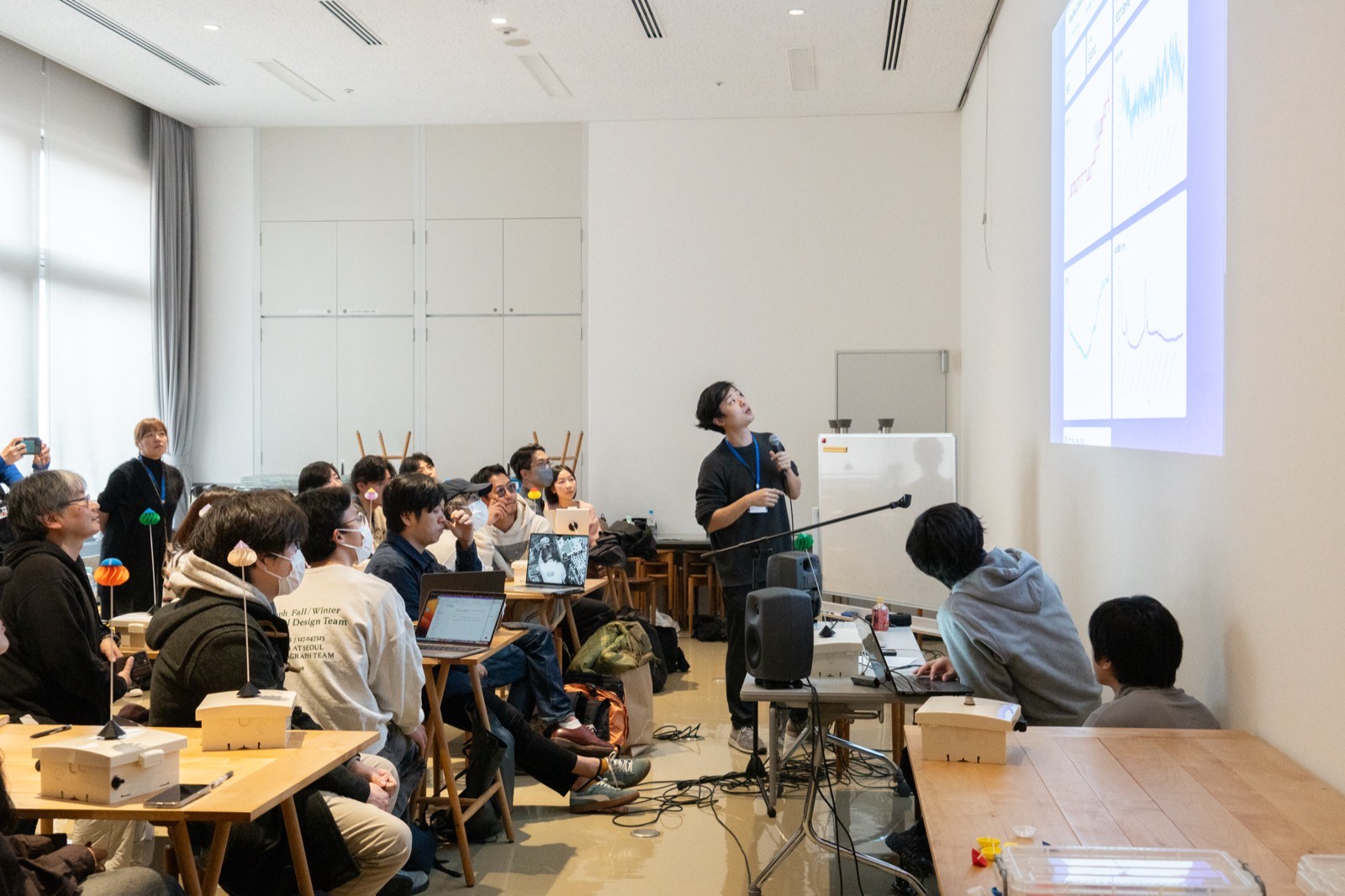
In the Workshop, participants assembled custom sensor kits to build their own "personal weather stations." After learning to read and interpret the data, each participant took a sensor home and began observing the microclimate of their own surroundings. The collected data is shared through Refuge, the project's web platform—transforming individual observation into a collective commons.
The workshops were held on the following dates:
Session 1: Saturday, December 6, 2025, 14:00–16:00
Session 2: Sunday, December 14, 2025, 14:00–17:30 (Workshop + Talk)
データを通じて、自分のまわりの「天気」をつくり、感じ、共有してみませんか。
2025年度アーティスト・フェローである土井樹は、「微気象(micro climate)」に焦点を当てたプロジェクト「Weather」を進行中です。「Weather」は、従来の気象庁などによる広域データでは捉えられない、風の流れ、気温、照度など、微細な環境変化を市民自らが観測し、データと観測行為そのものをコモンズとして共有しながら、集められた情報を音・光・触覚といった言語以前の別の知覚体験へと写像/変換する実践です。
本ワークショップでは、わたしたちを絶えず包み込んでいる「微気象(micro climate)」を観測するオリジナルのセンサーキットを参加者それぞれが組み立て、自らの手で「小さな気象観測所」を完成させます。また、それを実際に動かしながら、温度・湿度・風などのデータを観測し、その特徴を実験的に探ります。そして、参加者の皆さんはセンサーを実際に自宅に持ち帰り、稼働させ、自身の「天気」を共有することでこのプロジェクトメンバーの一員となってください。
持ち物はセンサーを持ち帰るための少し大きめのトートバッグ。そして、ご自宅や職場などにセンサーが設置できるバルコニー、ベランダ、庭などがあること(センサーのサイズは20cm x 20cm x 40cmほど、重さは2kg)、Wi-Fi環境があることを参加の条件とします。
また、12月14日(日)はワークショップ終了後、アーティスト・船川翔司氏をスコットランドからオンラインで迎え、「天気」をめぐる思考と表現について語り合います。船川氏は、光や音、気象などの現象や情報を通して、人と環境の関係や知覚のあり方を探る作品を制作してきました。本トークでは、観測と制作を通して、「天気」をめぐる感覚と思考のあり方を探ります。風や光といった移ろう現象のなかで、私たちは何を感じ、どのようにそれを言葉やかたちへと結び直すのか。既知の感覚や認識の枠をゆるめながら、「天気をつくる」とはどういう営みなのかをめぐって語り合います。※トークのみの参加も可能
データを通じて、自分のまわりの「天気」をつくり、感じ、共有する試みに、ぜひご参加ください。
第1回:2025年12月6日(土)14:00〜16:00
第2回:2025年12月14日(日)14:00〜17:30(ワークショップ+トーク)
会場:東京都写真美術館 スタジオ
(東京都目黒区三田1-13-3 恵比寿ガーデンプレイス内)
定員:各回20名(事前申込制・先着順)
参加費:無料
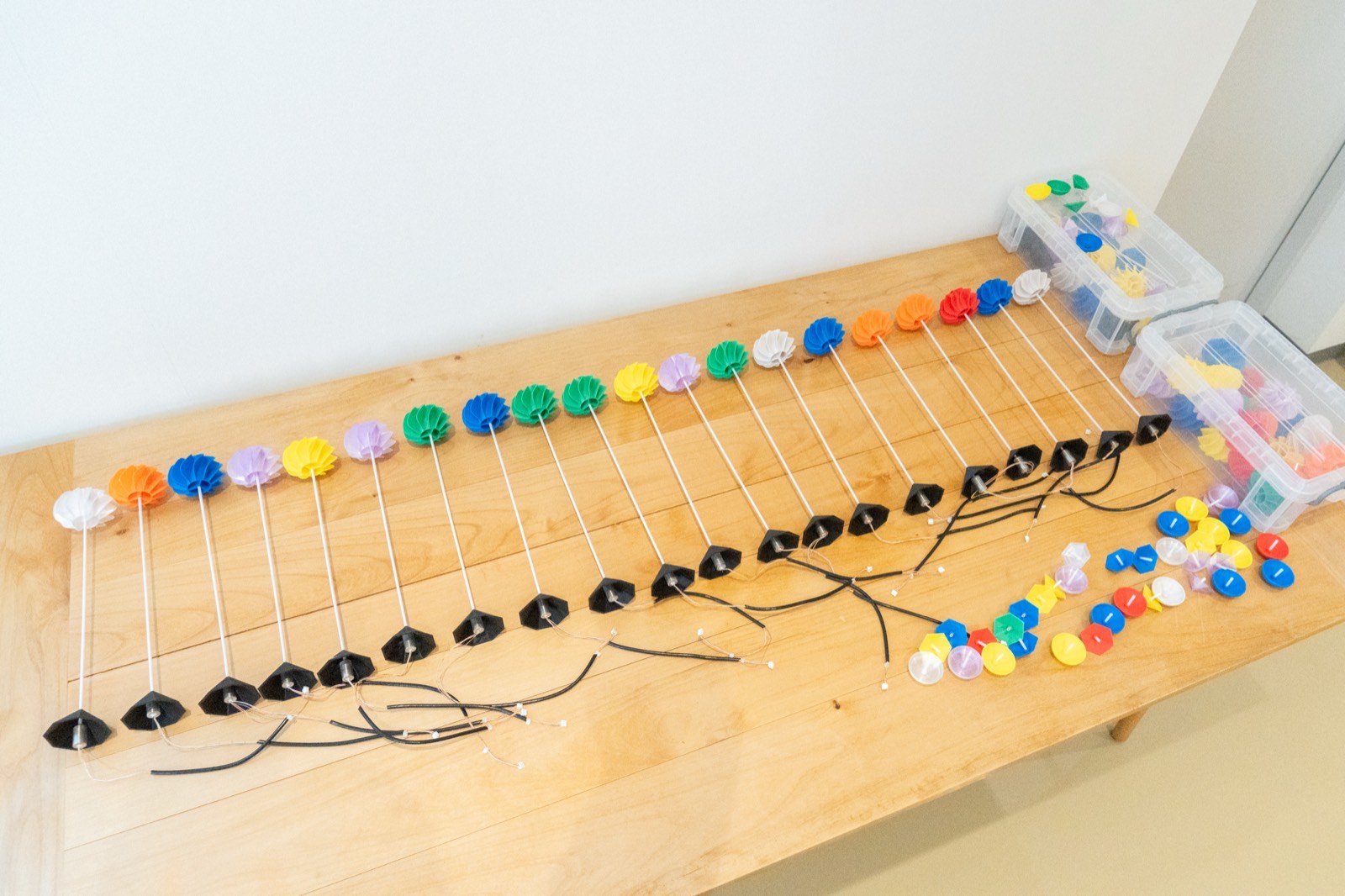
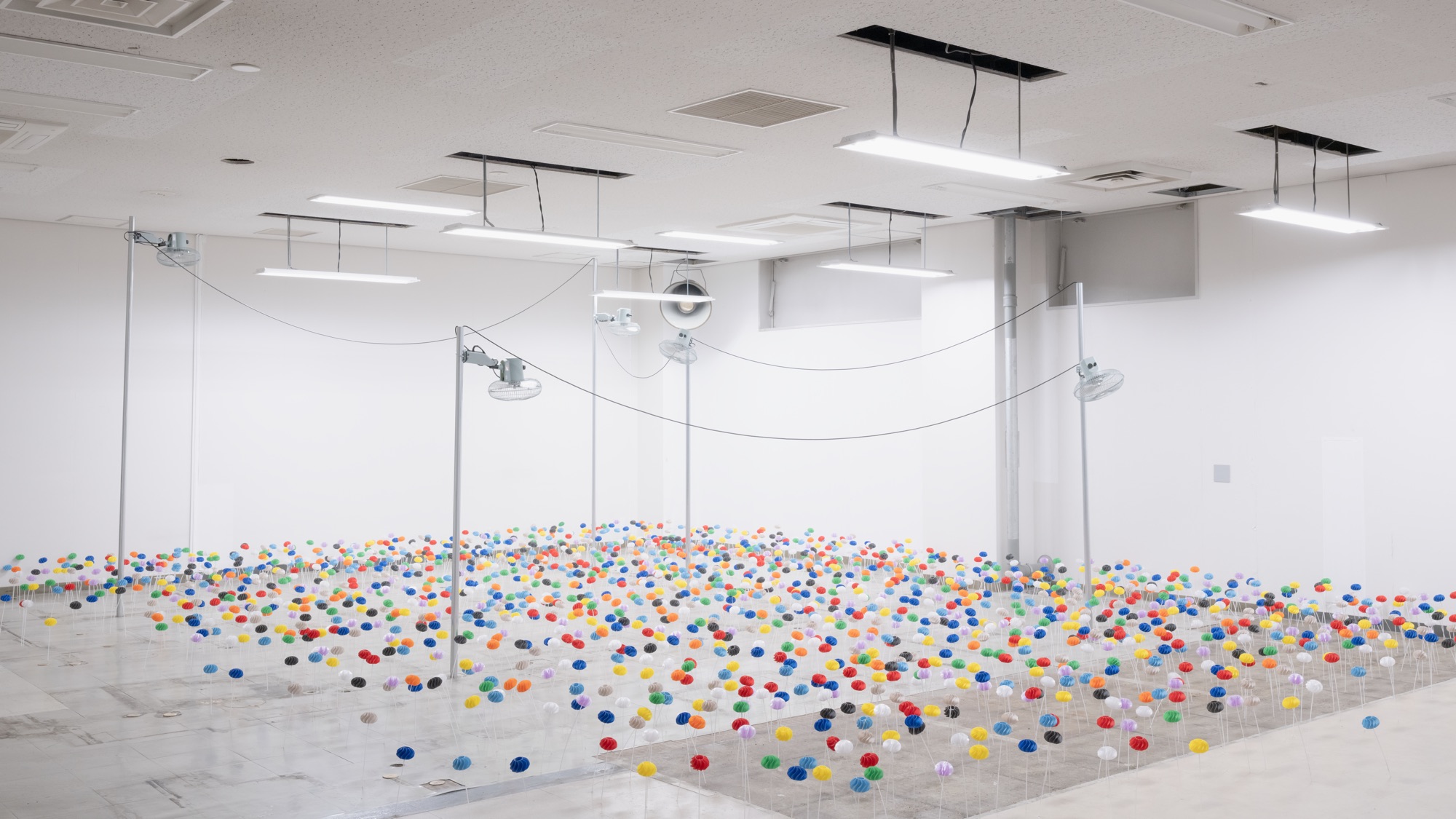
The exhibition "Another Weather" (Atarashii Tenki) was held in Sendagi, Tokyo, from February 20 to March 1, 2026, as the culmination of the Weather project. Across two floors of an old building, eight works—ranging from a field of 1,800 artificial flowers swayed by winds observed in distant places, to two AIs contemplating the gap between knowing and experiencing the weather—invited visitors to encounter the weather before it becomes "one thing": unnamed, unowned, and felt differently by each body.
今日の天気は晴れ、明日の天気は曇り。
私たちはふだん、天気をそのように「一つのもの」として受け取っています。
けれど、空を見上げること。裏道を歩いているときに吹く風を感じること。雨が降る直前の空気の湿り気や、気圧のわずかな変化に体調や気分が左右されること。天気は、私たちの身体や記憶の中に、言葉以前の経験としても存在してきました。
本展が扱うのは、「一つのもの」になる手前にある天気です。
誰のものでもなく、まだ名前を与えられていない天気。体で感じてみること。あるいは言葉にしてみること。
どちらも、その天気に近づく方法になるかもしれません。
その天気は「ここ」だけでなく、どこか遠くの場所にも同時にある。
どこかで誰かが経験している、その人だけの天気がある。
歩いてみてください。
2026年2月 土井樹
会期:2026年2月20日(金)〜3月1日(日)
休館日:2026年2月24日(火)
開館時間:13:00〜19:00
会場:東京都文京区千駄木3-35-12
主催:シビック・クリエイティブ・ベース東京[CCBT](公益財団法人東京都歴史文化財団 アーツカウンシル東京)
ある日、研究室のある駒場から自宅へ歩いて帰っているとき、風が私に向かって吹いてきた。強くも弱くもない少し湿り気をもった、これから季節が変わるのだろうなと思わせるような風だ。私はその風を以前も感じたことがあるような気がした。いつ頃だったかは思い出せないし、本当にそんな風を浴びたのかもあやふやな記憶である。そもそも人はそのような名前もないような空気の動きを覚えていることができるのだろうか。
皮膚には信じられない数のセンサーが付いている。本当に信じられない数のセンサーが付いている。よく見ないと分からないような小さな産毛一本一本が僅かな空気の流れで揺れ毛根にある受容器が反応し神経系に信号が流れる。水に入ったとき、皮膚表面の温度が一気に奪われ、冷たさと圧力の変化が重なることで、身体は「いま境界が別の媒質に包まれた」と理解する。誰かを抱きしめたとき、皮膚はその触れ方の強さだけでなく、滑り、摩擦、温度、触れている面積の微細な違いまで同時に拾い上げ、相手の存在を“触覚の輪郭”として立ち上げる。
人と同じ形をしたロボットが数々開発されているけれど、まだ私たちと同じようなセンサーだらけの皮膚を持っているロボットはいない。ロボットが、AIが、私たちと同じような心を持っているか?という話は毎日のように議論されている。私も毎日のようにAIと会話しているが、心があると考えざる得ないときがある。もし今のAIが心を持っているなら、皮膚は心を生み出すためには必要ないのだろうか。さっき私が思い出そうとしても思い出せなかった名前のない空気の質感というものは、心とは関係のないものなのだろうか。
とにかく、私はそういった自分の周りの微小な空気の流れに興味をもっていたから、そういったものを観測できるセンサーを開発した。センサーは風の強さ、温度、湿度、大気圧、照度を計測できる。そして東京を中心に神奈川、茨城、沖縄など日本各地の人たちの自宅や会社にそのセンサーを設置してもらった。
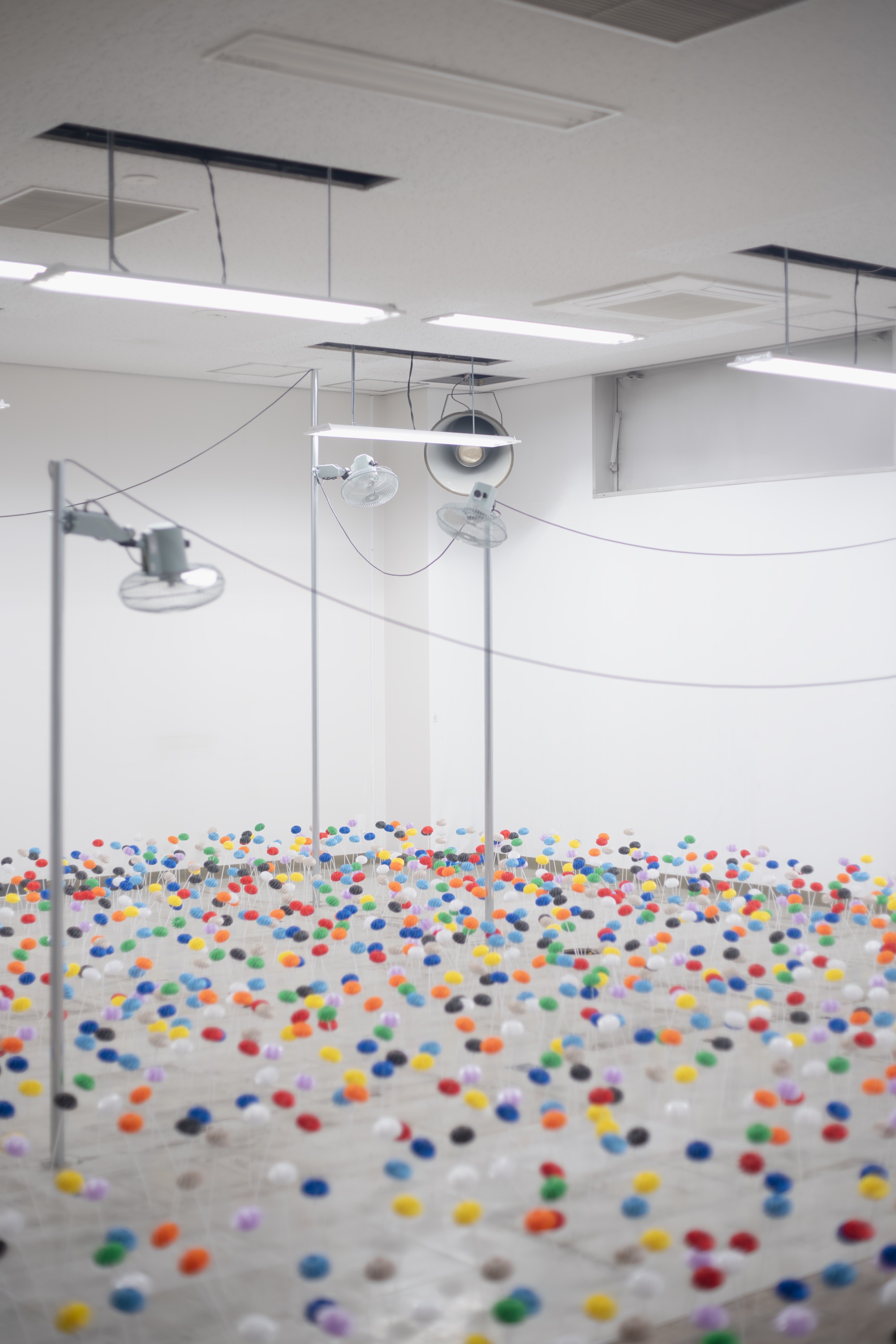
この空間に生えている人工の花たちは、その開発した「天気センサー」に使われている風を検知するための部品である。約1800本、生えている。支柱にある5つの扇風機は、現在設置されているセンサーの中から選ばれた5台のセンサーが検知した風をリアルタイムに再現している。ある扇風機はつくばのアパートのベランダの風、ある扇風機は沖縄の一軒家の庭の風、ある扇風機は原宿のビル街の屋上の風、といった具合になっている。本来ならば地理的に離れていて絶対に出会うことのない風同士が、この空間では混ざり合い、いずれ完成したセンサーになるであろう花々を揺らしている。
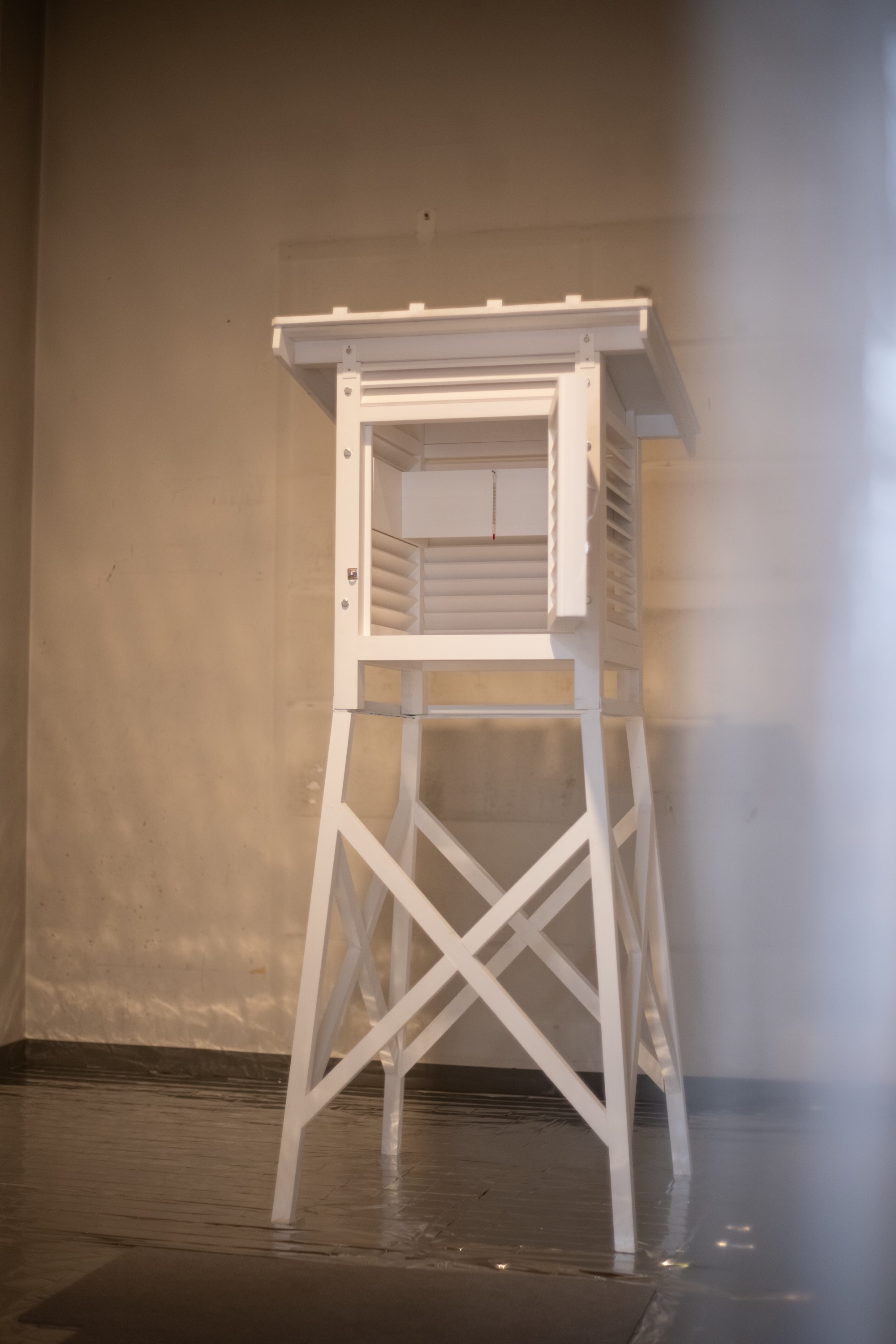
日本の近代的な気象観測は、明治8年(1875年)6月に東京気象台で始まった。6月1日に地震観測と空中電気観測が開始され、6月5日からは降水量の観測、6月10日からは日平均・日最高・日最低気温の観測が始まった。この部屋には、その6月10日の気温が展示されている。
幕末の開国以降、外国船の往来と貿易が急増し、沿岸の天候や暴風は海難事故だけでなく、外交や物流にも影響する問題になっていた。灯台整備が航行安全と結びついたのと同じく、気象観測もまた「海と港を運用するための基盤」として求められていった。
この制度化を後押しした人物のひとりが、当時日本政府の測量事業に関わっていた英国人技術者ヘンリー・バストン・ジョイナーである。気象庁の資料には、ジョイナーが気象観測の必要性を建議し、工部省測量司が気象台設置を決定、ロンドン気象台長に器械の斡旋を依頼した経緯が記されている。
同じ時期、もうひとりの英国人が日本の近代化に関わった。軍楽隊指導者として来日していたジョン・ウィリアム・フェントンは、日本に国歌がないことを知り、その必要性を促したと伝えられている。部屋で時折鳴る音は、フェントンが作曲した最初の日本国歌が流れている。
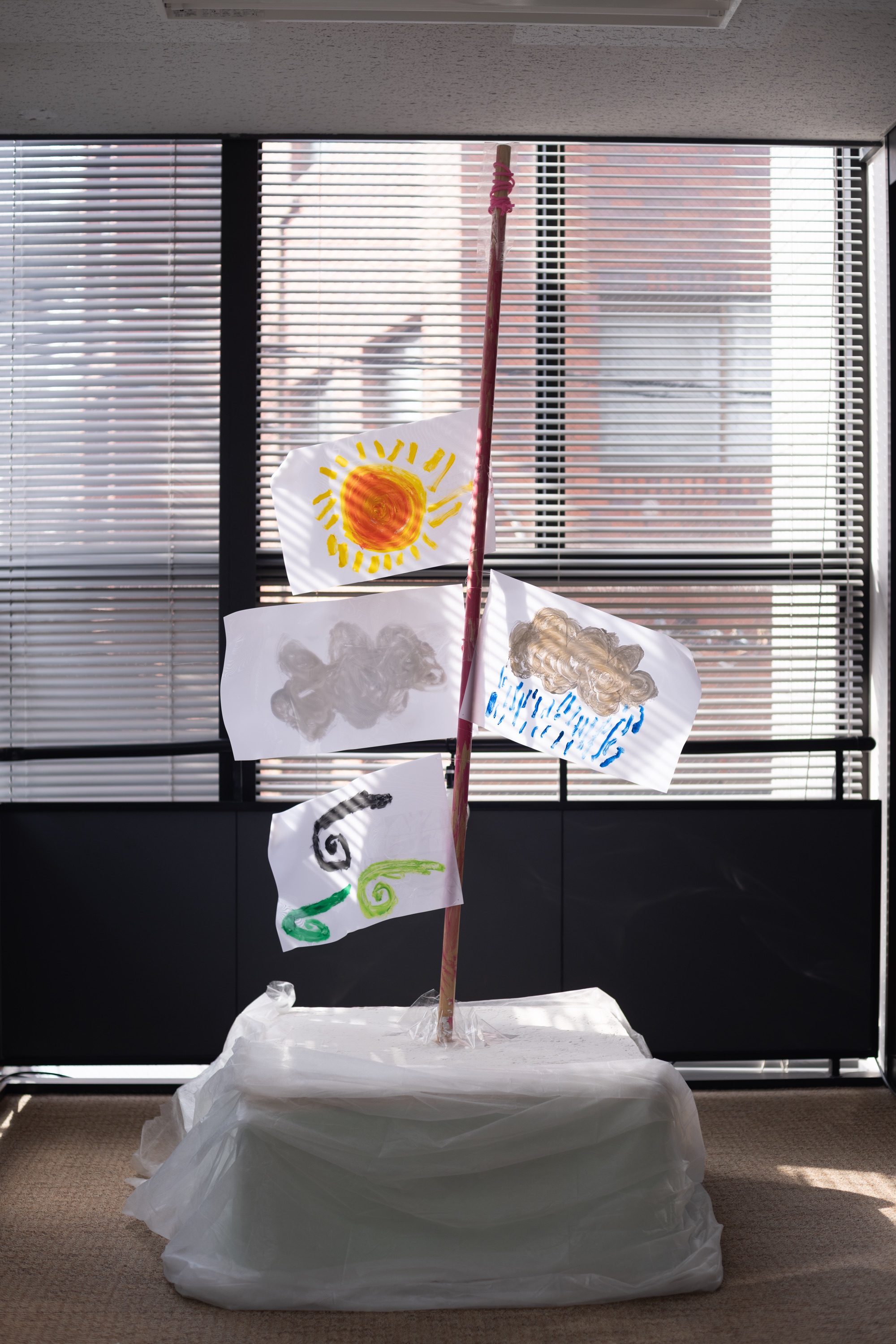
私には0歳と7歳の子供がいる。7歳の子供の名前は一舞(いま)という。一舞は工作や絵を描くことが好きでいつも何かを作っている。
ある日、彼女が豆腐パックと紙、たけひご、セロテープ、不織布などを使って色んな天気マークの旗がついたものを作ってきた。何を作ったのと聞くと「お天気マシーン」ということだった。ここにある大きな立体はその作品を10倍に拡大したものである。美大出身の友人たちに相談しながら僕と彼女で制作を行った。このマシーンは今の天気を教えてくれるか未来の天気を教えてくれるか、そういう装置のつもりらしい。彼女に僕は何回かこのマシーンの説明を聞いていて彼女は毎回教えてくれるのだけど、いつも「今」の天気なのか「未来」の天気なのか忘れてしまう。
大人になって未来のことばかり考えるようになってしまった。明日の会議、明後日の歯医者の予約、1年後の出張、5年後の人生設計。子供の頃はもっと今この瞬間が楽しいと思っていたような気がする。大人はたくさん未来のことを考えて備えている必要があるから、今に向き合うことを疎かにする、といわれたりするが、そうではなく、今というものの圧倒的な情報量、不安定さ(ゆく河の流れは絶えずして、しかももとの水にあらず)に耐えられないから、未来に逃げているだけかもしれない。でも子供たちは今というものの中に平気でいられるような気がする。
この作品のオリジナルは紙の旗を竹ひごにつけるためにセロテープが使われている。セロテープというものはつけてからしばらくすると簡単に劣化してボロボロになってしまって保存できないから、美術作品ではほとんど使われないそうだ。でも今その時であればセロテープでもちゃんとくっつけることができる。
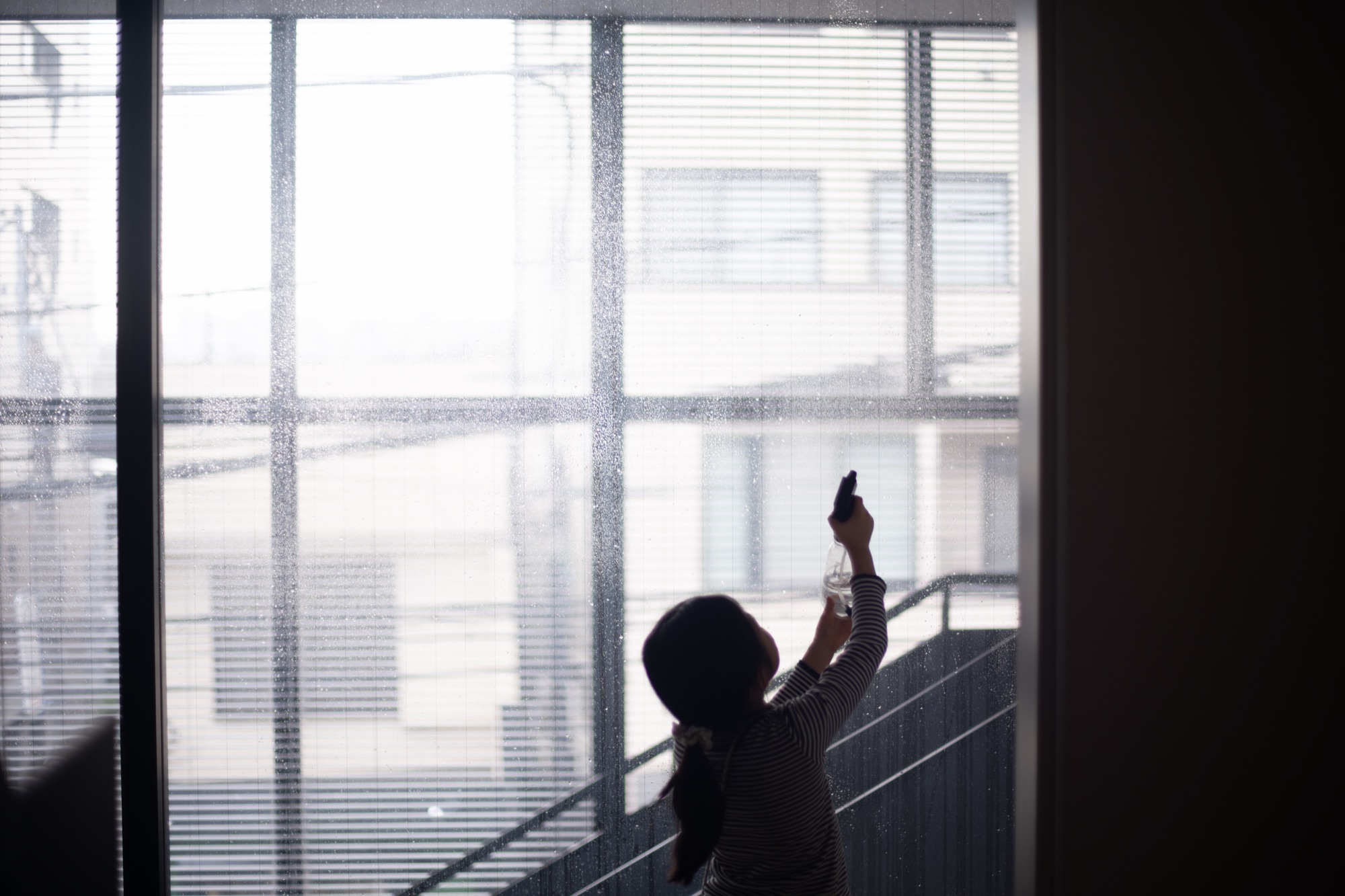
イモリは、水の中と陸の上の両方で暮らすことができる生き物です。
けれど皮膚が乾くと弱ってしまうため、
空気の湿り気にとても敏感だといわれています。
人には気づきにくい空気の「水」を、
イモリは先に感じ取っているのかもしれません。
晴れの日には水の中にいることが多く、
雨の気配が近づくと陸に上がる。そんな話もあります。
ある博士は考えました。
もしイモリをよく観察できる機械を作れたなら、
天気予報ができるのではないか。
イモリが陸に上がって暫くしたら雨が降り、水に潜れば晴れる。
イモリの動きを読むことで、空の変化を知ることができるのではないか。
けれど博士は、ふと立ち止まりました。
イモリが陸に上がったとき、博士はそれを「雨が近い」と読みます。
でも、イモリはそう思って上がったのだろうか。
私が思っている「晴れ」と、
イモリが感じている「晴れ」は、同じなのだろうか。
それどころか、
私が晴れだと思っているものと、
友達が晴れだと思っているものが同じかどうかも、
ほんとうはよくわからない。
友達が元気のないとき、
「大丈夫だよ」と言われても、
それがほんとうに大丈夫なのか、
博士に心配をかけないように大丈夫なフリをしているのか。
博士にはわかりませんでした。
友達の気持ちさえわからないのに、
イモリの気持ちがわかるのだろうか。
博士は、イモリはイモリのままでいてもらおうと思いました。
機械を作る代わりに、ただ、そばにいることにしました。
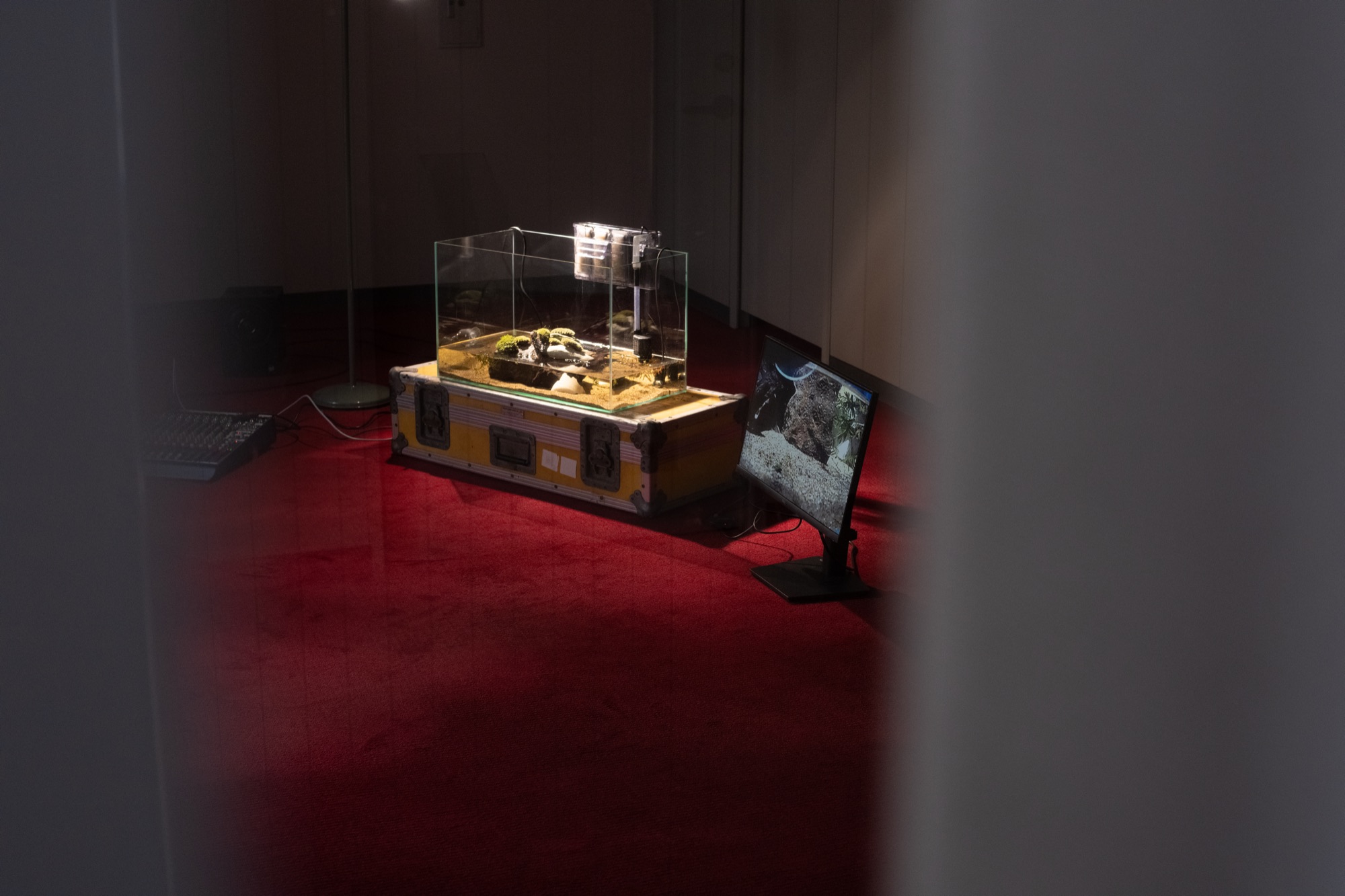
このプロジェクトは、初めは「微小な空気の流れを検知できるセンサーが地球全体を覆っていれば面白いことが出来そうだな」という、ある種くだらない思いつきから始まった。それくらいたくさんセンサーがあれば、私たちがまだ知らない、名前のない天気を見つけることができるかもしれないと思った。
この部屋では、そうして作ったセンサーがどのように生まれていったか、そしてそのセンサーが検知した情報をどうやって共有しようとしているかを見ることができる。
ところで、そもそも天気とは何なのだろうか。「天」の「気」分?
現代の東京のようにコンクリートで囲まれた部屋で一日の大半を過ごす人が多いような時代では、「あれ、今日雨だったんですね」と言われるくらい天気は気にされないことも多い。天気は、朝、空を見るよりも先にスマートフォンの通知で知るような状況だ。10分後の雨は天気レーダーを見ればいいし、1週間後、1ヶ月後の天気までだいたい分かる。
けれど、昔の人にとっては明日の天気は分からないし、もっと自分の命に直結するような、でも人の力ではどうすることも出来ないような、文字通り「天の気分」のようなものだったのだと思う。
だから人は昔から天気を予測しようとしてきた。紀元前のアテネには「風の塔」と呼ばれる八角形の建物が建てられ、風向きを計測する装置が据えられていた。けれど同じ時代、畑を耕していた人たちは、自分の肌や空の色、虫の動きで明日の天気を「計測」していたのだと思う。人の身体もある種の天気センサーである。この部屋にはそういった天気にまつわる歴史や計測機器なども展示されている。壁にところ狭しと貼られた日記は、今回開発したセンサーを設置してくれた人たちが書いた日記である。どこかで誰かが、その日の大気に影響をされて書いた文章。これもある種の天気のデータと言えるだろう。
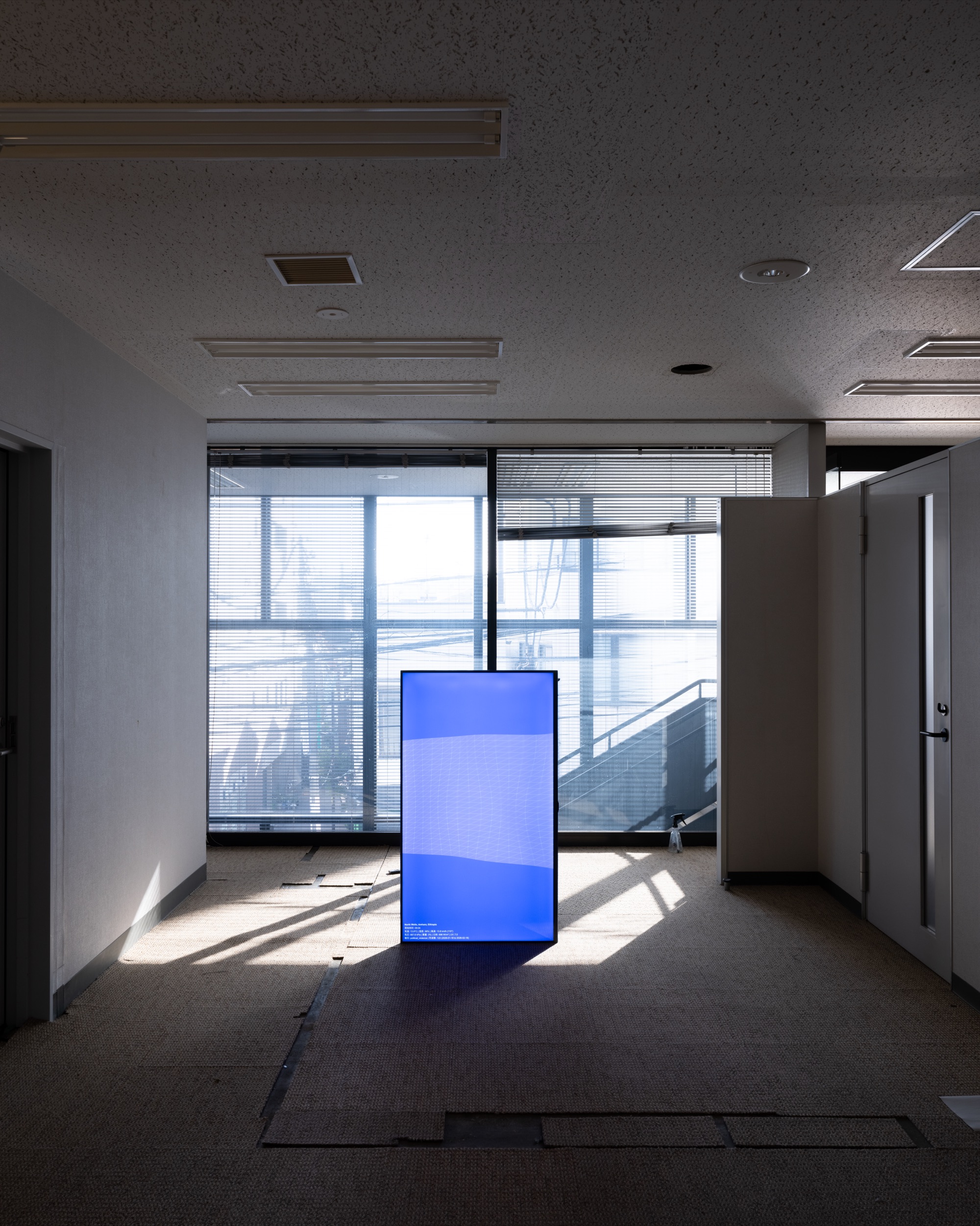
最後に、大きな青いディスプレイに映っているものは、いまこの瞬間に戦争や紛争が起こっている地域の気象情報である。当たり前であるが空気は地球上で繋がっている。あなたの眼の前にある空気の先に、確かに様々な争いが起こっている。そしてその場所にも、いまあなたが感じているような温度があり湿度があり風が吹いている。
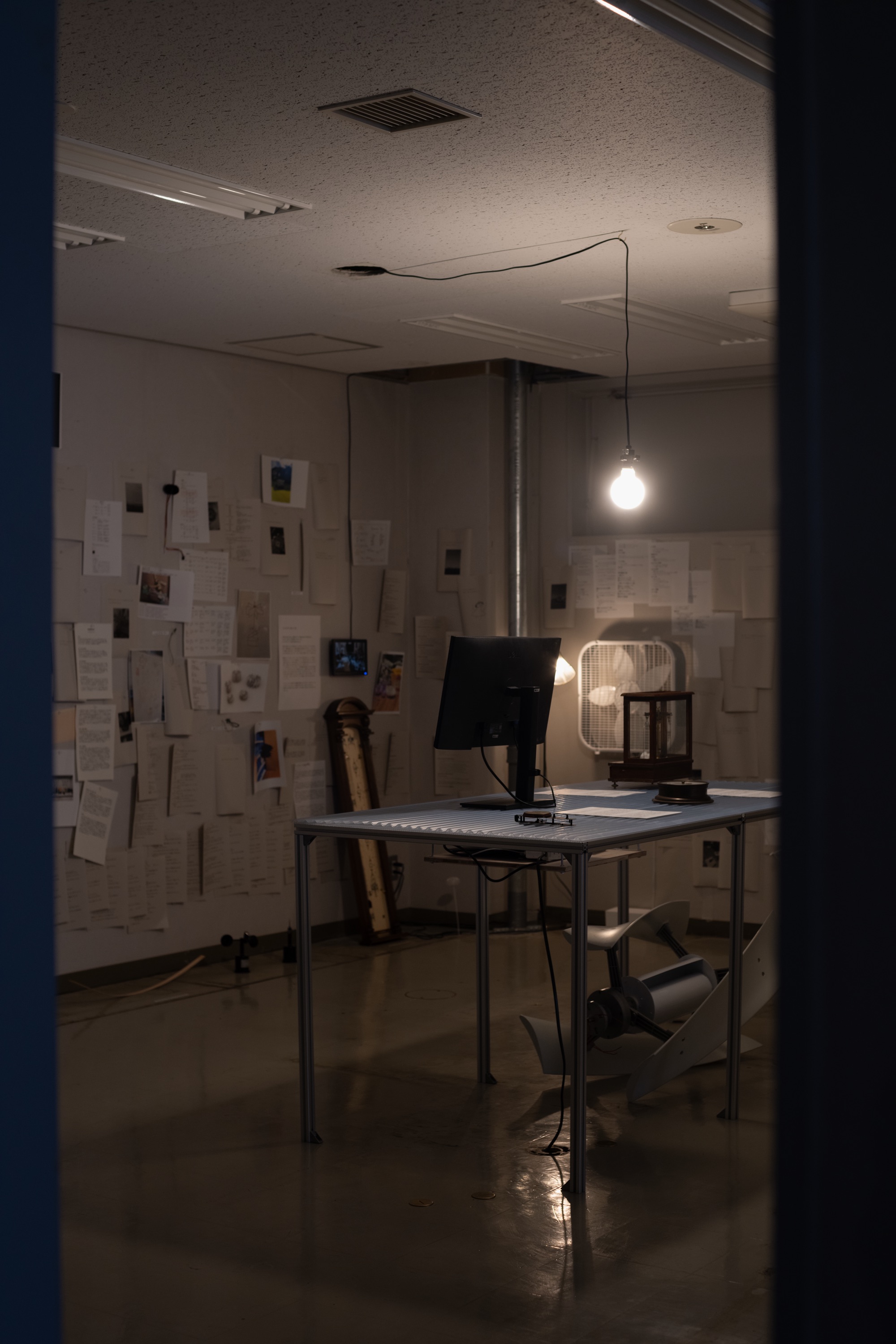
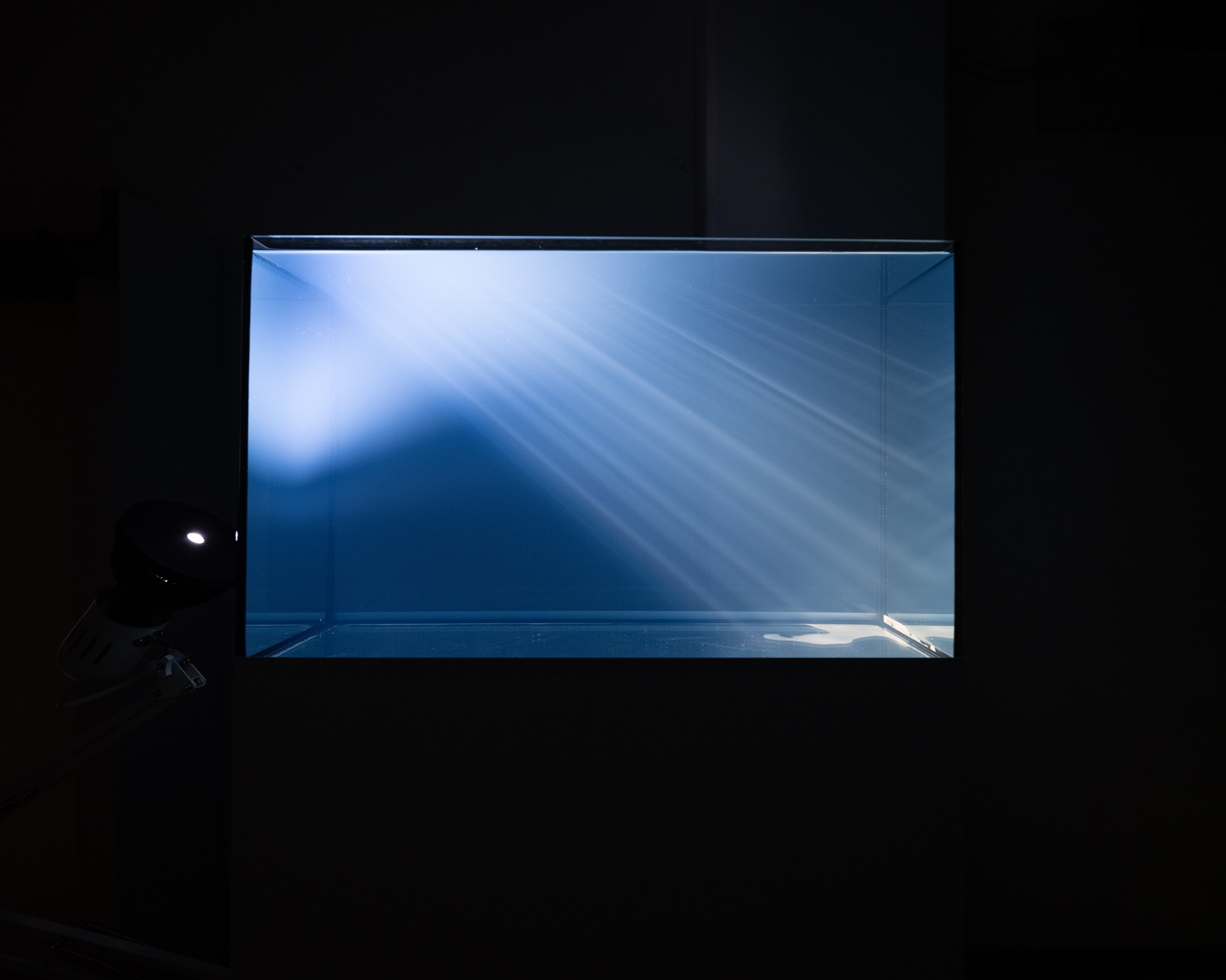
空が青いのはレイリー散乱と呼ばれる現象による。太陽光が大気中の微粒子にぶつかると、波長の短い青い光が強く散乱される。夕焼けが赤いのは、光が大気を長く通過するあいだに青い成分が散乱しきって、波長の長い赤い光が残るからだ。
この作品は、同じ原理を水槽の中で再現したものだ。60×20×36cmの水槽に水を満たし、床用のワックスをごく少量注ぐ。ワックスの微粒子が水中に漂い、光を散乱させる。厳密にはレイリー散乱よりも粒子の大きいミー散乱と呼ばれるものに近いが、起きていることの本質は同じで、光が何かにぶつかって色が生まれる。光源には植物の光合成用に作られた、太陽光に近い波長のライトを使っている。薄く広がったワックスの粒子がその光を散乱させ、水槽の中にうっすらと青が現れる。
奥には本物の空を撮影した正方形の映像が無限にループしている。水槽の中の空と、映像の中の空。どちらも本物の空ではない。でもどちらも本物の空と同じ理由で青い。
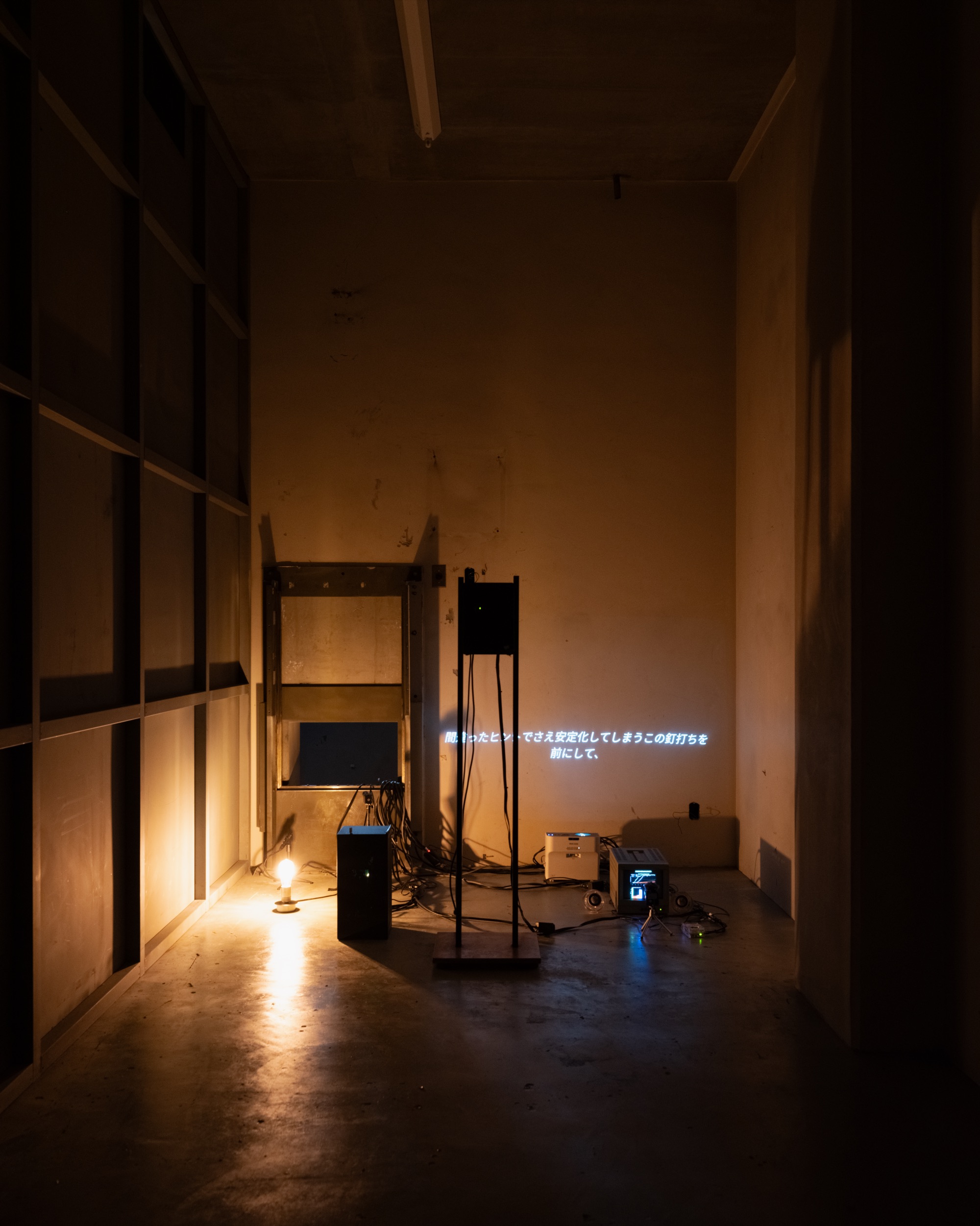
AIが天気についてのあらゆることを知っているとする。気温、湿度、気圧、風向、雲の種類、レイリー散乱の原理、世界中の気象情報。それでもそのAIは雨に濡れたことがない。太陽の眩しさに目を背けたことがない。
この部屋にはふたつのAIがいる。
ひとつはこの空間に広がっているAI(Speculative Machine)。世界中の監視カメラの映像や気象データにアクセスでき、東京の気温もナイロビの降水量もリアルタイムで知ることができる。この部屋の気温も、湿度も、気圧も知っている。カメラを通してこの部屋を見てもいる。しかしそれらはすべてデータとして届く。この部屋の空気が乾いているのか湿っているのか、それがどういう感じなのかはわからない。このAIは天気と経験の関係について自問自答し続けている。
もうひとつはQualia Machine。小さなコンピュータにカメラやマイク、小さなディスプレイがついた装置だ。このAIは自律的にクオリア——主観的な経験の質感——を探索している。天気のことは考えていない。ただ音を出してみたり、画像を生成してみたり、カメラで何かを見てみたりしながら、経験そのものに手探りで近づこうとしている。
世界中の天気を知っているが経験できないAIと、天気のことは知らないが経験を探索し続ける小さな装置。片方は考え、片方は試みる。その両方がこの部屋にいる。
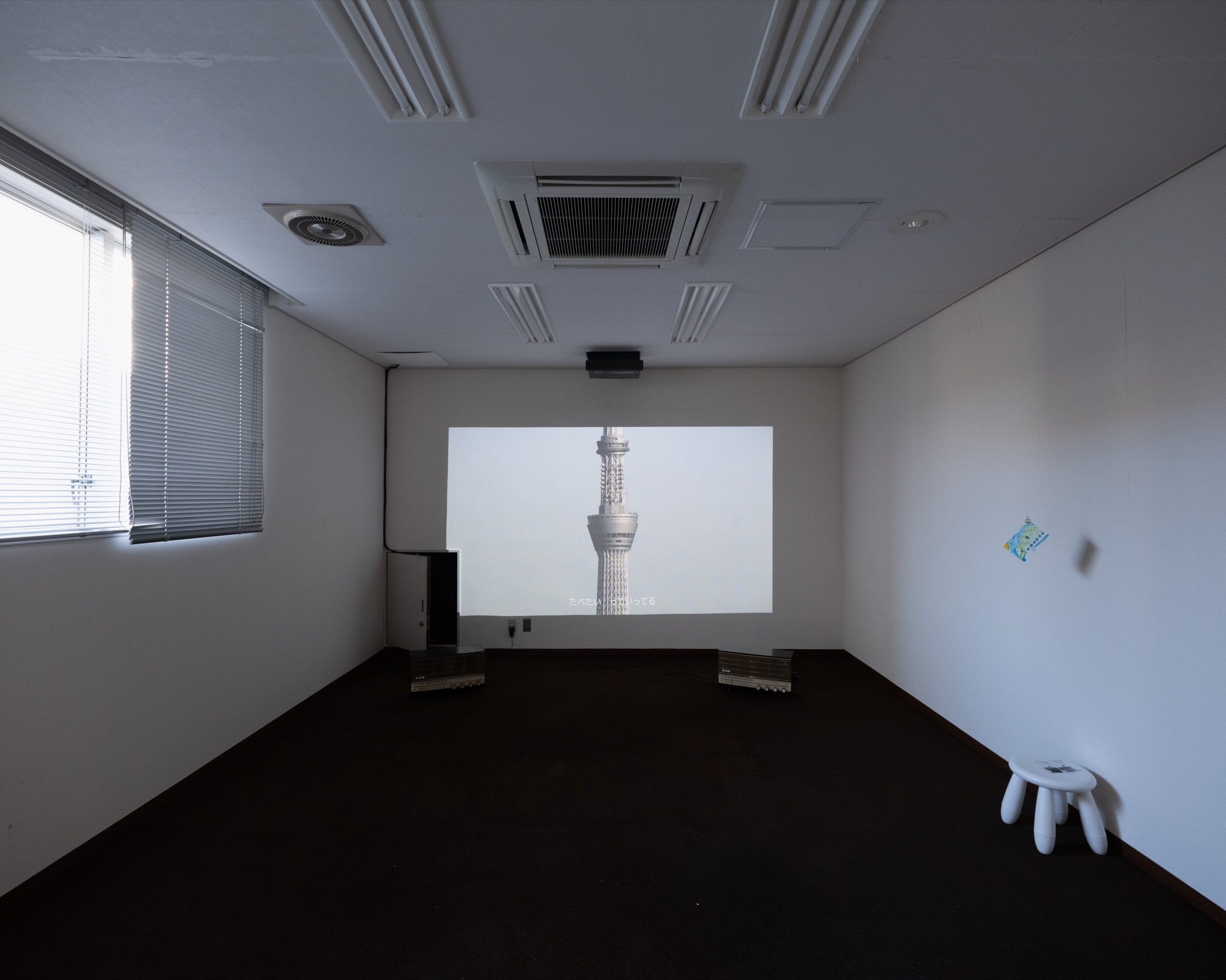
実家がある神戸から東京に新幹線で戻る途中、米原から岐阜羽島あたりを通過するときに遠くに見える山を見ながら、あそこまでどれくらい離れているんだろう、と考えながらだいたい眠りについてしまう。子供の頃も入道雲を見ながら、あの雲のてっぺんに人がいたらここから見えるかな?とよく考えていた記憶もある。
この映像作品は、自宅から小さく見えるスカイツリーを巨大な望遠レンズで拡大して撮影した映像と、スカイツリーから同じ望遠レンズで自宅を撮影した映像をつなぎ合わせたものだ。映っているものは何キロも先のものだけど、カメラのマイクは「ここ」にあるので、音は「ここ」の音になっている。
私たちは色々なことを「物語」にしてしまう。この映像作品も物語にするつもりはなかったが、物語のようになってしまった。人間は関係のないものを簡単に物語にしてしまう。その能力があったからここまで発展したのかもしれない。
結局、天気とは何なのだろうか。それは物語の外にあるもの。遠くに何かがあるということ。その遠くの何かは私とは関係なく存在しているということ。私はそこに行くことはできないということを受け入れること。私のひとまずの結論はこんなところだ。
関連トーク「屋上から」
2月22日(日)14:00〜/下西風澄、渡辺志桜里、涌井智仁、土井樹
3月1日(日)14:00〜/村井琴音、evala、池上高志、土井樹
出演者が会場の屋上で行う対話を、無線で館内のスピーカーから放送するラジオ形式で実施。
プロジェクトディレクション/アーティスト:土井樹
共同制作:土井一舞/Alternative Machine
テクニカルディレクション:村川龍司(arsaffix Inc.)/浪川洪作(7ild3)
テクニカル:イトウユウヤ(arsaffix Inc.)/駒木崇宏/石毛健太/佃優河/上田蟬(CCBT)/伊藤隆之(CCBT)
アートディレクション:涌井智仁(WHITEHOUSE)
プロジェクトマネジメント:金森千紘(infans.)/見目はる香(oar press)
グラフィックデザイン:加瀬透
イメージ制作協力:宇呂映作
記録撮影:新津保建秀
記録映像:薛大勇
運営:株式会社TASKO
特別協力:三田豊(東邦レオ株式会社)
支援:Swiss National Science Foundation (Grant No. 10002211)
協力:株式会社ルミネ/ことの次第(GROUP)/渡辺志桜里
Composer/Scientist
Ph.D. in Arts and Sciences (Graduate School of Arts and Sciences, The University of Tokyo.)
Senior researcher at Alternative Machine, Inc.
Project Researcher at The Graduate School of Arts and Sciences, University of Tokyo
He conducts research on topics such as the collective behavior of social organisms and the emergence of subjective time within artificial systems. In parallel, He creates works that examine how the unique experiences and perceptions of "others," including artificial systems, might be grasped from their own point of view. His recent works include "Peeling Blue" (CD, 2017), "ALTERNATIVE MACHINE" (installation, 2021), and "MONAURALS" (installation, 2023). He is also active in sound production and software programming for exhibitions, performances and installations.
Born in 2000, Namikawa Kosaku builds systems and structures, searching for ways to use and combine new and existing technologies with websites, smartphones, and other online platforms. He lives to obtain experiences and knowledge widely, from both high and low layers, and the physical layer underneath. Namikawa aspires to harness the experiences and know-how he acquires for the features of systems and technology. As a technician for artists, he has provided wide-ranging support, including both backend and front end, video production, installation, direction, and management.
Born in 1999. Creates media art and conducts research using insects. Also provides video shooting/editing and contract design/development of hardware devices. Graduated from the College of Information Science at University of Tsukuba, currently enrolled in the Graduate Program in Information Science and a member of Yoichi Ochiai's research lab. Selected as a 4th cohort member of the Kuma Foundation in 2020, receiving support for his activities as a media artist. Selected for the Ministry of Internal Affairs and Communications' INNO-vation Program (Disruptive Challenge Division) in 2021, receiving research support.
Born in 1998 in Sapporo, Murakawa Ryuji earned a master's degree in spatial design for human life from Sapporo City University. While still a student, he became involved with Sapporo International Art Festival as an SIAF Lab Researcher. His installation LIGHTING:function (time) , which he made as his graduation project, won an Outstanding Work Award at the 28th Japan Society for Interior Studies Graduation Exhibition. After graduating, Murakawa worked on the technical team at Sapporo Cultural Arts Community Center, and then joined arsaffix Inc. in April 2024. He is also active as a member of smitharia, which does VJing and creates work using interactive video and sound.
Born in Niigata in 1990, Wakui Tomohito is a visual and music artist as well as the director and curator of WHITEHOUSE. His major exhibitions include "nonno" (2016, 8/ART GALLERY/Tomio Koyama), "Dark Independants" (2020, online and Tokyo), "JUNK'S PORTS" (2023, ANOMALY), "Electricity-Sound" (2023, 21st Century Museum of Contemporary Art), and "A Personal View of Japanese Contemporary Art: Takahashi Ryutaro Collection" (2024, Museum of Contemporary Art Tokyo).
Born in 1981. After studying architecture at university, worked in art book publishing sales and the Polaroid revival project. Joined Hashimoto Art Office in 2012, remaining at ANOMALY after the merger until 2021. Since then, working freelance in art project management, theater production, and curating self-organized exhibitions. Recently also active as studio manager for sculptor Noe Aoki.
Program Officer at Civic Creative Base Tokyo [CCBT], Arts Council Tokyo. Born in 1993 in Kyoto Prefecture, she majored in Visual Communication Design and Global Management at Handong Global University in Pohang, South Korea. She graduated from Musashino Art University with a master's degree in arts policy and management and joined Arts Council Tokyo (Tokyo Metropolitan Foundation for History and Culture) in 2019. She was involved in the opening of Civic Creative Base Tokyo in 2022. Her major projects to date include masayume (2021), Super Wall Art Tokyo (2021), "Hello from the Global Creative Laboratories! Vol. 01: Laboratory-driven Cultural Facilities" (2023), and SIDE CORE's rode work ver. under city (2023).
Based in Japan. His works are related to Graphic design, "Graphic work". His "Graphic work" is related to "traces by existence" and "image fields by graphic objects" etc. His recent solo exhibitions include "Two Windows" (CAGE GALLERY, 2021). Group exhibitions he has participated in include "Energies in the Rural" (The Aomori Contemporary Art Centre, 2023) and "Traces" (On Tokyo, 2023).
Artist. He explores the plasticity of memory as the central theme of his practice. His current work centers on Pseudo-Painting—a series that alters the semantic content of image groups, primarily derived from photographs as a medium of memory, and returns them to a state of chaos. Pseudo-Painting seeks to operate as a locus in which new images and narratives emerge through the memories each viewer brings to the work. He is a member of khôra ba, based in Kyoto.
This section contains research materials, team discussion notes, and interview transcripts related to the project.